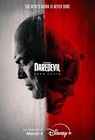
 Main cast: Charlie Cox (Matt Murdock/Daredevil), Vincent D’Onofrio (Wilson Fisk/Kingpin), Tony Dalton (Jack Duquesne), Margarita Levieva (Heather Glenn), Deborah Ann Woll (Karen Page), Wilson Bethel (Benjamin Poindexter/Bullseye), Zabryna Guevara (Sheila Rivera), Nikki M James (Kirsten Mcduffie), Genneya Walton (BB Urich), Arty Froushan (Buck Cashman), Clark Johnson (Cherry), Michael Gandolfini (Daniel Blake), Ayelet Zurer (Vanessa Fisk), and Jon Bernthal (Frank Castle/The Punisher)
Directors: Justin Benson and Aaron Moorhead

Daredevil: Born Again closes its first season not with a bang, but with an increasingly familiar whimper—the kind where you realize, somewhere around the fifth slow-motion brooding shot, that the show has no idea what it’s actually building toward.
This final episode, Straight to Hell, ramps up what the series does best: unleashing violence on New York City with such abandon that one starts to wonder if the entire population of Hell’s Kitchen consists of expendable NPCs. The body count piles up, the chaos escalates, and yet no one—not a cop, not a SHIELD agent, not even a mildly curious Avenger—bothers to check in. It’s as though this version of New York exists in a parallel dimension where crime runs rampant and logic took a vacation.
At long last, Kingpin gets his moment of triumph. Vincent D’Onofrio, ever the consummate professional, delivers a commanding performance as Fisk reclaims his empire and seals his unholy alliance with Vanessa, now officially crowned Queenpin. It’s a pairing that could have been great—two ruthless operators ruling the city with charm, menace, and an art collection. Instead, we’re left with the faint echo of what could have been, as the show’s limited writing reduces their storyline to a few cryptic lines and a lot of squinting.
Vanessa’s transformation into a criminal mastermind might have worked if it had been seeded with anything resembling care or consistency. Instead, it’s just another twist tossed into the mix without buildup, motivation, or payoff—like the writers hoped the sheer surprise factor would do the heavy lifting.
The Punisher appears to have been shoehorned in during the reshoots as Marvel’s last-minute attempt to inject energy into the increasingly limp narrative. Jon Bernthal is, as always, a walking wrecking ball of charisma and ultraviolence, but even he can’t mask the feeling that his presence is decorative more than consequential. He beats people up. That’s about it. It’s fanservice in its purest, most undercooked form.
And then there’s Matt. Poor, pouting Matt. Charlie Cox spends the episode doing little more than glowering into the middle distance while his stunt double handles the physical heavy lifting.
As the episode limps toward its conclusion, we’re treated to a final montage of characters brooding—Sheila broods, Kirsten broods, Matt broods so hard he practically black holes the scene. It’s less of a dramatic finale and more of a sad slideshow.
The show wants us to believe this is all leading to a meaningful arc. Fisk is Kingpin again. Matt finally decides to be Daredevil again. But these “developments” are exactly where we started, dragged out over a dozen episodes that constantly flirt with big ideas without the confidence or coherence to pull them off. It just plasters the vibe of power over a hollow shell and hopes the audience won’t notice.
There are glimpses of something better buried beneath the rubble. A quiet conversation between Matt and Fisk early in the season had real promise, suggesting a more introspective, character-driven approach. But moments like that are rare, and they clash so jarringly with the rest of the season’s tone that it’s obvious they were products of a reshoot scramble. You can practically see the seams where the showrunners tried to stitch together two very different versions of a show—one dark and thoughtful, the other a shallow, confused attempt to chase current trends.
In the end, Daredevil: Born Again becomes yet another example of the MCU’s creative chaos machine at work. Characters wander in and out without consequence, subplots implode mid-arc, and what was once a gritty, gripping corner of the Marvel universe now resembles a glossy, over-edited mess. The finale doesn’t conclude a story—it just runs out of runtime. The only thing born again is the audience’s desire for a better Daredevil show.