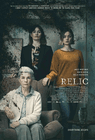
 Main cast: Emily Mortimer (Kay), Robyn Nevin (Edna), and Bella Heathcote (Sam)
Director: Natalie Erika James

At first glance, Relic might look like just another entry in the folk horror buffet with its mysterious old houses, creeping darkness, and just enough Australian gloom to make you wish you’d stayed home.
Then, slowly, terrifyingly, you realize it’s not about the house at all. It’s about dementia. Yep, a horror movie that doesn’t just rattle your nerves. It rips open your heart and hands it to you on a moldy silver platter.
Kay and her daughter Sam arrive at the remote family home to look for Kay’s mother, Edna, who is missing. What follows is a series of disappearances, Post-it note obsessions, and a house that seems to be staging a hostile takeover by black mold.
At this point, you might roll your eyes at the metaphorical obviousness. But here’s the kicker: the movie isn’t preachy. It’s quietly devastating.
The mold is not just wallpaper gone wrong; it’s the creeping decay of mind and memory. The Post-its aren’t just organizational tools; they’re desperate lifelines to hold on to a life slipping away. And the house that deliberately traps its inhabitants? That’s the caregiver’s reality: you can’t just leave, even when you’re suffocating under the weight of responsibility.
Relic doesn’t hit you over the head with its themes. No, it drags you in, sits you down in a haunted silence, and dares you to fill it yourself. Jump scares are minimal, but the terror is exquisite: the kind that makes your chest ache because you know what it’s like to love someone whose mind is eroding, and how that love can bleed into exhaustion, grief, and quiet despair.
Yet, amidst the horror, there is love. Not a toxic, saccharine “all is forgiven” kind, but a real, painful, and sacrificial love. You experience the toll, you feel the suffocation, and still, you endure, because love isn’t about convenience. It’s about choice, even when that choice feels like walking into the same haunted house every day.
Technically, the movie is beautiful: the pacing measured, the words sparse, and the silence louder than any scream. It’s smart, graceful, and unflinching, a rare horror that is as heartbreaking as it is scary. And the scarier moments aren’t monsters — they’re the intimate recognition that loving someone can hurt, can demand sacrifice, and can leave you trapped in ways that are impossible to escape.
Relic proves that horror doesn’t need gore or jump scares to sting. Sometimes it’s the quiet, inevitable decay of memory, and the relentless devotion of those who stay behind, that scares you most. And if that isn’t haunting, what is?