 AIR Studios
Pop, 1990

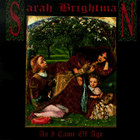
As I Came of Age is that Sarah Brightman album that exists in that special category of “things that were nearly impossible to find until the internet made everything searchable”. This early entry in Ms Brightman’s discography serves as fascinating archaeological evidence of an artist still figuring out her cosmic destiny, like finding baby photos of a future supermodel where they’re still going through an awkward phase.
Perhaps the most historically significant aspect of this album is that it provides concrete proof that Sarah Brightman once possessed a lower vocal register. Yes, you read that correctly. Before she ascended to her final form as Earth’s own Diva Plavalaguna (complete with the otherworldly stratospheric notes that could probably communicate with satellites), Ms Brightman could actually sang in ranges that normal humans could theoretically attempt.
This makes As I Came of Age something of a musical Rosetta Stone, the last known recording evidence that Ms Brightman hadn’t yet fully committed to her destiny as the universe’s premier soprano space goddess.
Like most of Ms Brightman’s early work, this is an album of cover versions, which immediately presents the fundamental challenge of all tribute albums: you need to either dramatically improve upon the original or transform it so completely that comparisons become irrelevant. It’s like trying to repaint the Mona Lisa — you’d better have something genuinely revolutionary to offer, or people are going to wonder why you didn’t just leave well enough alone.
The song selection here is genuinely intriguing in its diversity. We get predictable musical theater anthems like Love Changes Everything and Good Morning Starshine, which make perfect sense for someone with Ms Brightman’s theatrical background.
But then things get wonderfully weird with choices like Aimee Mann’s B-side Yesterday (You Stopped Crying) and Bryan MacLean’s Alone Again Or – selections so unexpected they feel like the result of a very eclectic record collection and possibly some creative decision-making influenced by late-night Wikipedia rabbit holes.
Here’s where things get tricky. Ms Brightman approaches most of these songs by essentially “being Sarah Brightman” at them, which sounds reasonable in theory but proves problematic in practice.
Take her version of that Aimee Mann track, for instance. Ms Mann’s original is a masterclass in subtle understated emotion and delicate vulnerability in spite of the upbeat nature of the song. Sarah Brightman’s interpretation transforms it into something that sounds like it should be performed by a lovelorn android in a space opera. All the nuanced tenderness gets replaced by what can only be described as “Brightman warbling”, which is impressive from a technical standpoint but completely misses the emotional point.
The good news is that probably only about twelve people on Earth (including Aimee Mann herself and some dedicated ‘Til Tuesday completists) are familiar enough with the original to feel personally offended by this interpretation.
Throughout most of the album, Ns Brightman’s undeniable vocal abilities are paired with arrangements that can best be described as pleasantly standard. The backing tracks often feel like they were ordered from a catalog of Generic Musical Theater Arrangements, Volume 3, which does her no favors as her voice frequently feels either too soaring for the material or somehow mismatched to the emotional temperature of the songs.
Credit where credit is due: Ms Brightman and her team clearly know how to curate an interesting playlist. The musical diversity here prevents any sense of sameness or predictability that often plagues cover albums. One moment you’re listening to Andrew Lloyd Webber, the next you’re experiencing an unexpected deep cut from the alternative rock catalog. There’s something admirable about an artist willing to take risks with unexpected material, even if those risks don’t always pay off.
The fundamental challenge with As I Came of Age is that awareness of the original versions tends to highlight what’s missing rather than what’s been added. Still, it occupies a unique position in Ms Brightman’s discography as both a historical curiosity and a reminder of artistic evolution in progress. It’s the sound of a future legend still figuring out her cosmic calling, which makes it fascinating for completists and largely skippable for casual listeners.